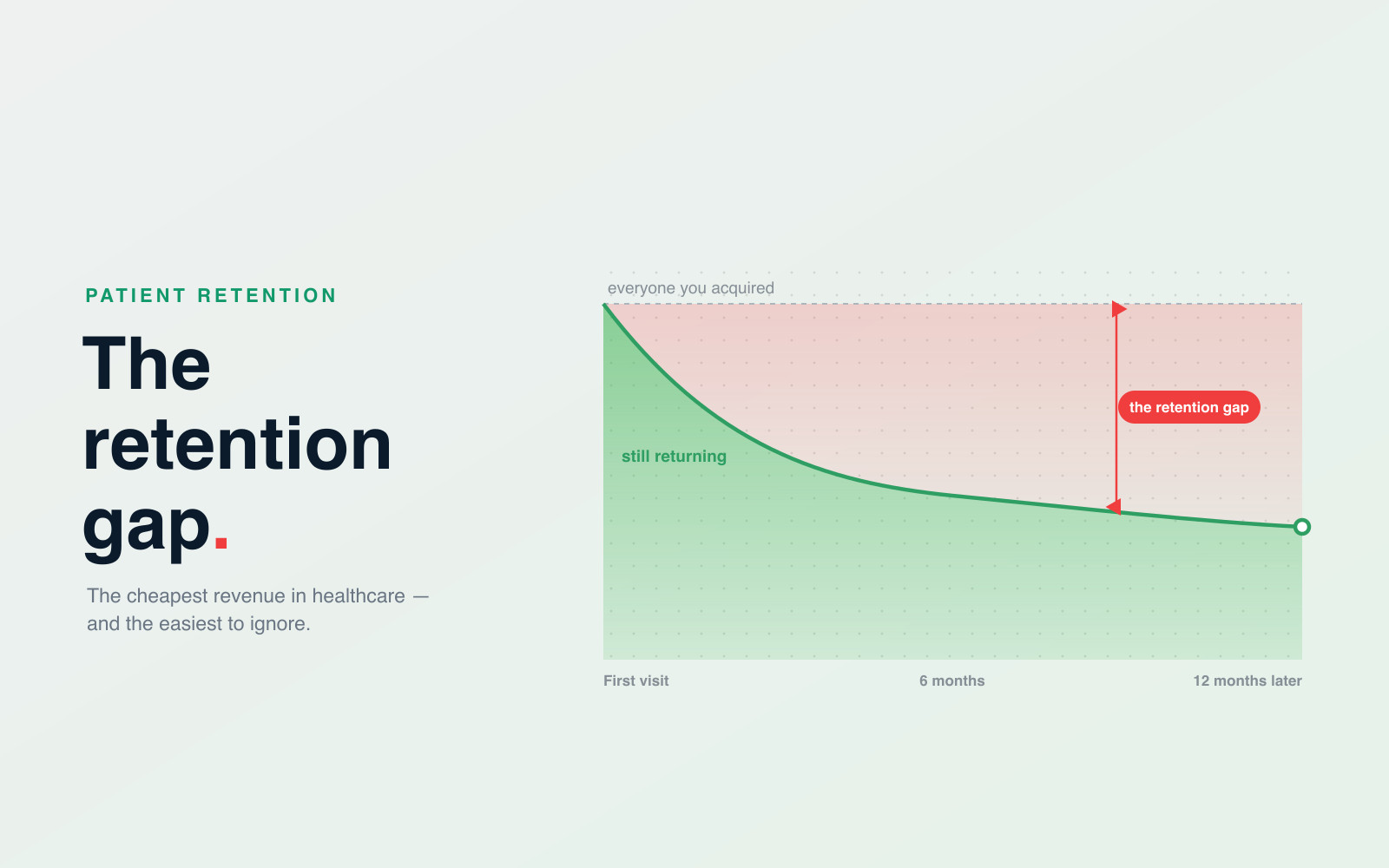
Every clinic tracks new-patient numbers. Far fewer track patient retention - the patients who came once, left satisfied, and never returned. That second group is usually larger than owners expect, and it is where the quietest revenue leak in the practice lives.
The reflex is to spend more on acquisition - more ads, more referrals, a busier front desk. But a patient you have already treated costs a fraction of a stranger to bring back, and they decide faster because the trust already exists. The retention gap is the distance between the patients you earned and the ones you kept.
Where the leak starts
Most visits end without a next step. The patient is treated, thanked, and sent on their way - with no reminder scheduled, no reason to return put in front of them, and no system watching for the moment they go quiet. Six months later nobody notices they haven't been back.
The leak is invisible because it isn't a bad review or a cancelled appointment. It's an absence. And absences don't show up on a dashboard unless something is built to count them.
The math most clinics never run
You don't need a model to feel the difference between winning a new patient and bringing back one you already know. But putting rough numbers to it makes the gap impossible to unsee.
| Path back to a booking | Rough cost | Likelihood to book |
|---|---|---|
| New patient (ads, referral) | $200-$400 | 5-20% |
| Lapsed patient (a text or email) | $5-$15 | 20-35% |
Pull the count of patients with no visit in the last 6 to 12 months and multiply by your average visit value. That number is your retention gap - for most clinics it dwarfs what the same effort in new-patient ads would recover.
Three levers that close the gap
Keeping patients coming back isn't a campaign you run once. It's three pieces of quiet infrastructure that keep working after the visit ends.
Timely follow-up
The first 48 hours after a visit are the highest-yield window you have. A short, relevant message - aftercare, a next-step reminder, a reason to come back - lands as care, not marketing, because the visit is still fresh. Miss the window and the same message reads as a sales pitch.
Smart segments
A blast to your whole list is spam. The same message sent only to the patients it actually fits is a recall. Grouping patients by treatment, recency, and value turns one clumsy broadcast into a handful of messages that each feel written for the person reading them.
An app patients keep
Email gets buried and SMS gets ignored. A branded patient app your clinic owns puts booking, reminders, and records one tap away - and every push notification reaches a screen the patient chose to keep. It's the difference between renting attention and owning the channel.
None of this replaces good care. It makes sure the patients who already trust your care don't drift away for want of a single well-timed message.
See your retention gap on your own numbers
We'll model it with your clinic's visit data in a short demo - no slideware, just your figures.