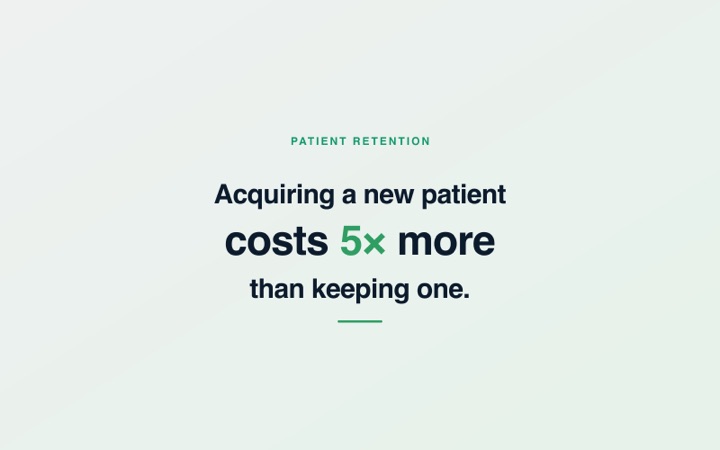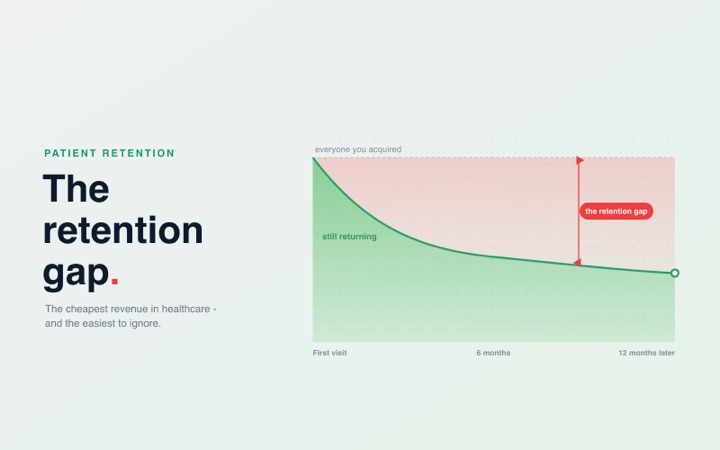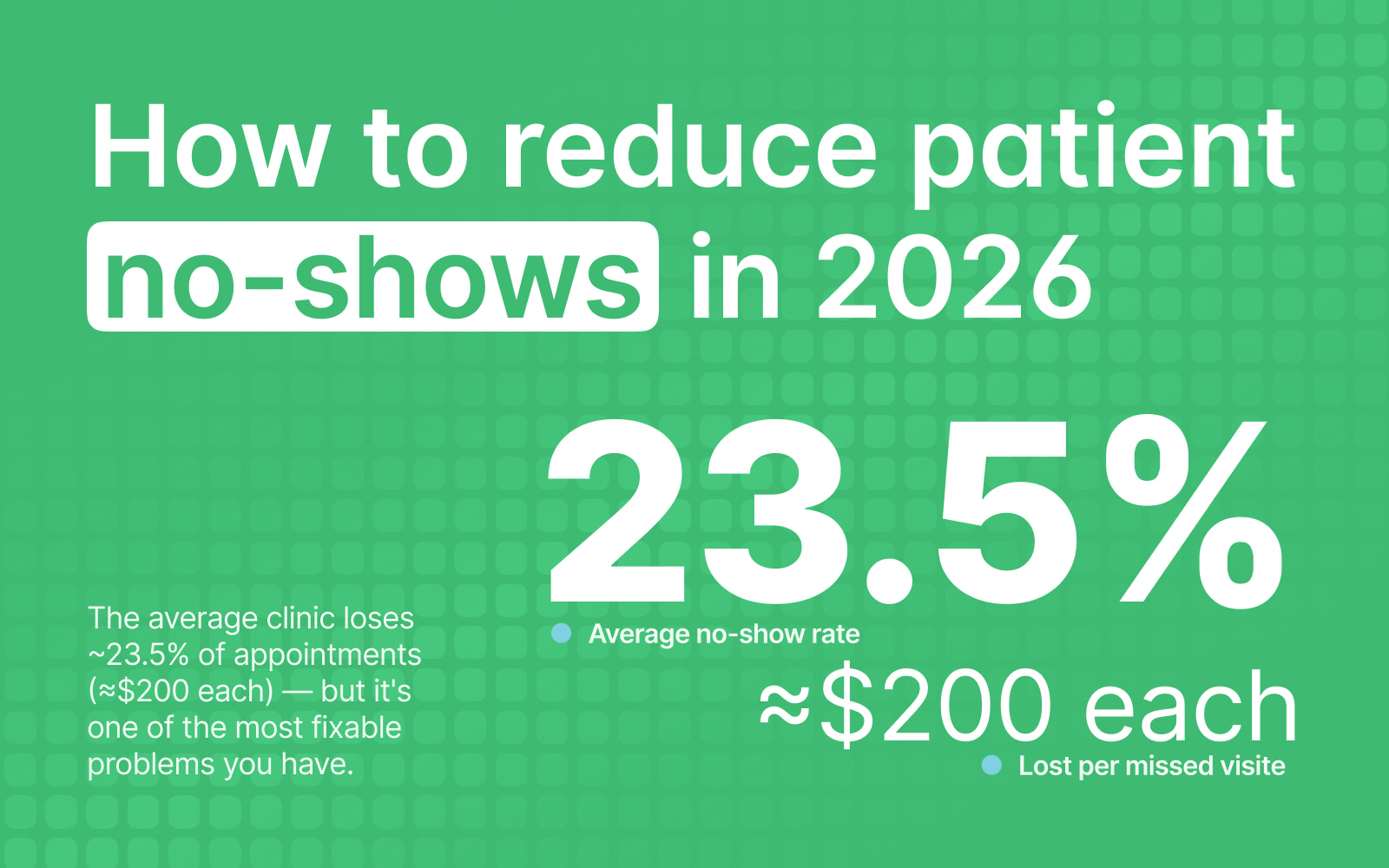
Every empty slot on your schedule is time your team can't get back - and it happens more than most clinics admit. No-show rates commonly run into the double digits, and far higher in some specialties. Behind that number is a clinician sitting idle, a longer wait for the patients who did show up, and appointments that quietly never get rebooked.
The encouraging part: patient no-shows are rarely about people not caring. They're about friction - a busy life, a moment of forgetfulness, and a booking process that makes it easier to vanish than to reschedule. This guide walks through how to reduce patient no-shows with eight tactics that genuinely move the number in 2026.
Clinics with the lowest no-show rates do three things well: automated reminders across more than one channel, easy patient self-scheduling and rescheduling, and a little financial commitment. Add a waitlist, risk-based outreach and honest data, and a 20%+ no-show rate can realistically drop into single digits.
First, understand what a no-show really costs
A no-show is a patient who neither turns up nor cancels in time for you to reuse the slot - and a last-minute cancellation you can't fill hurts almost as much. The damage rarely shows on a single invoice: three missed 20-minute appointments in an eight-hour day is a 12.5% drop in that provider's productivity, plus longer waits for everyone else and broken continuity of care.
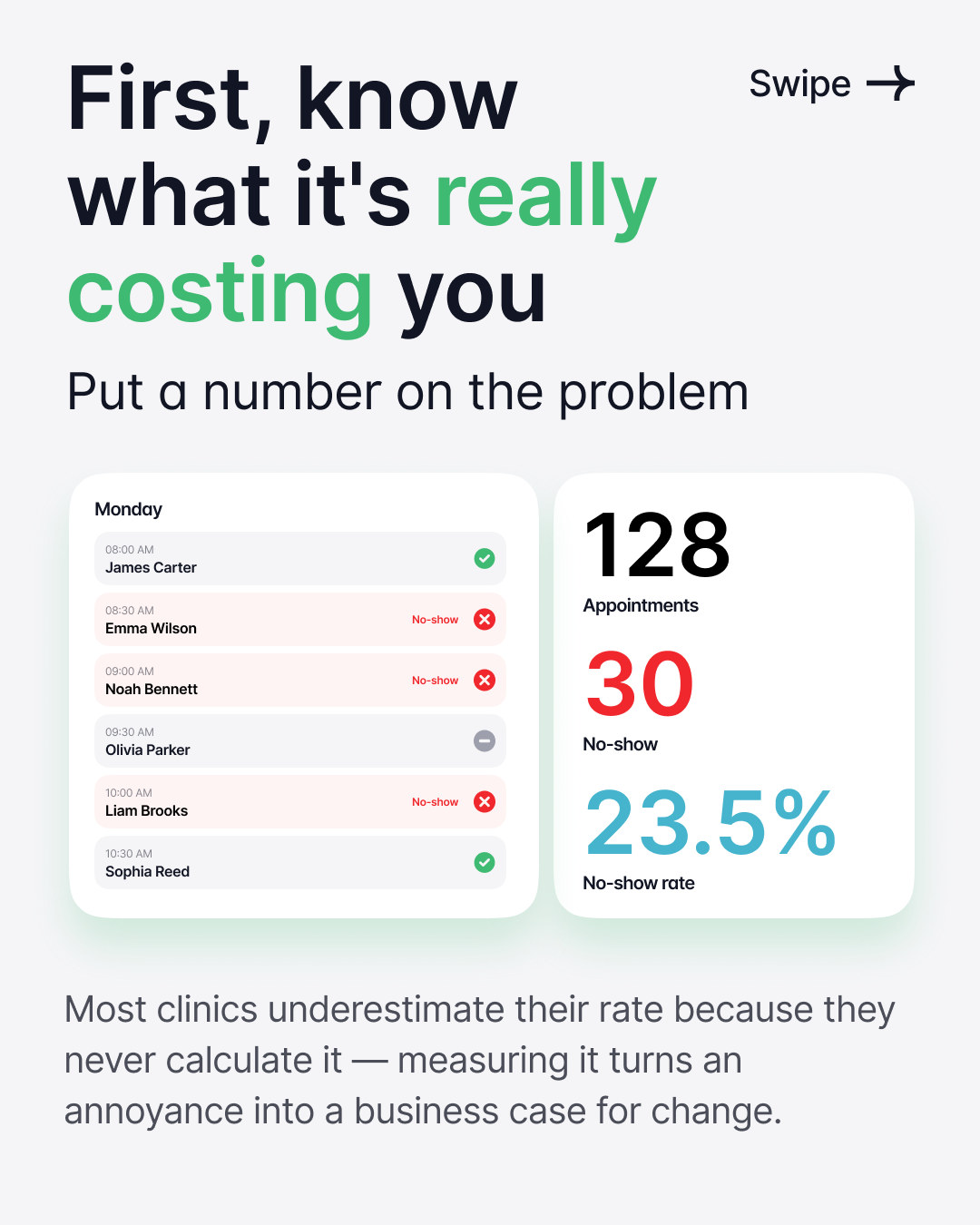
So put a number on it first. Knowing your own no-show rate and the real cost of missed appointments turns a vague frustration into a business case you can act on.
Eight tactics that move the number
Roughly in order of impact for the effort involved.
1. Automate reminders across more than one channel
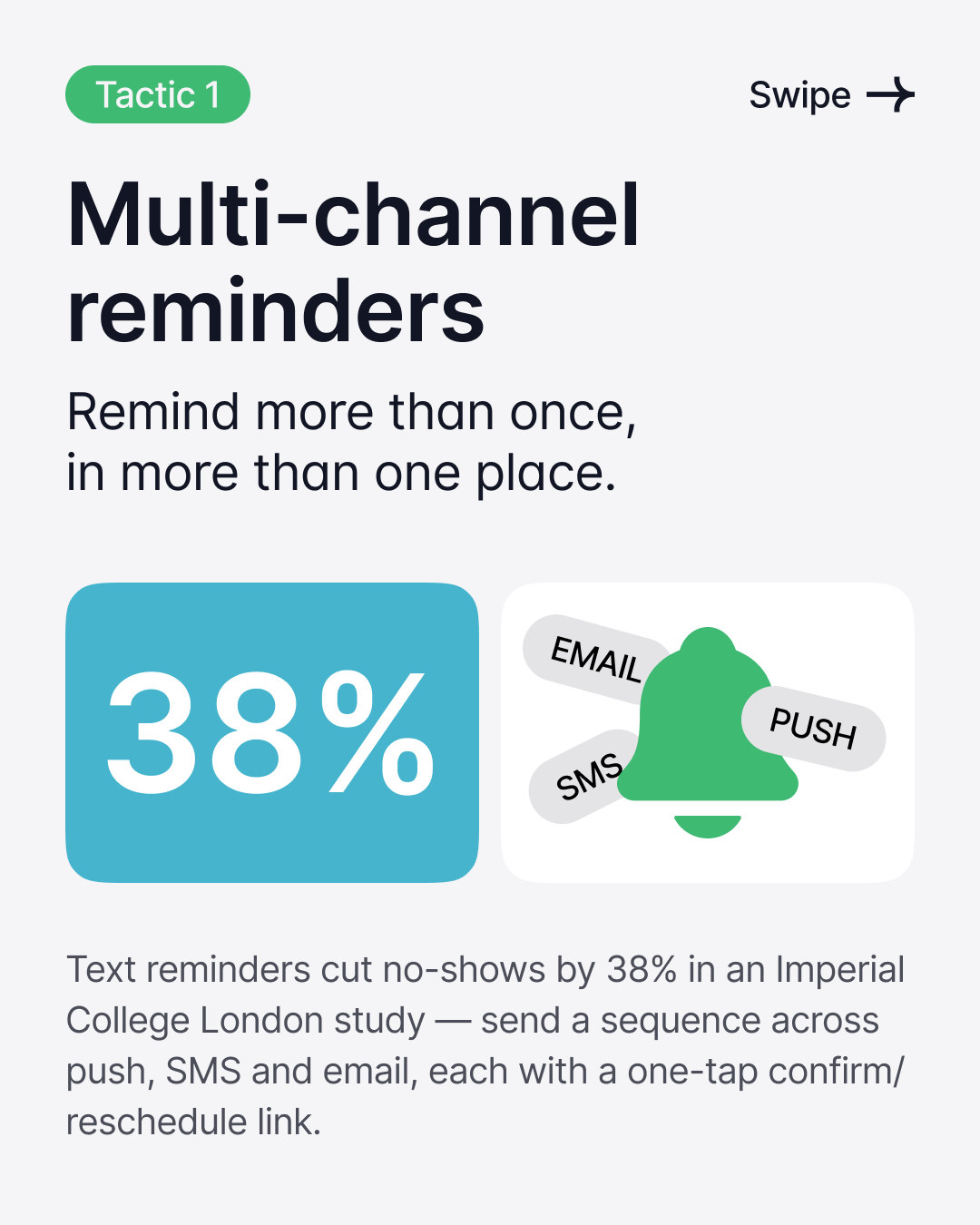
Reminders are the single highest-leverage fix. Text reminders cut no-shows by 38% in an Imperial College London study, at a fraction of the staff time of calling by hand. What separates clinics that still have a no-show problem from those that don't isn't whether they remind - it's how.
- Use more than one channel - SMS, email and app push together meet each patient where they actually respond.
- Send a short sequence - a confirmation at booking, a reminder around 72 hours out, and a final nudge the day before.
- Make every reminder do something - one tap to confirm, reschedule or cancel turns a would-be no-show into a kept or freed slot.
2. Let patients book, reschedule and cancel 24/7
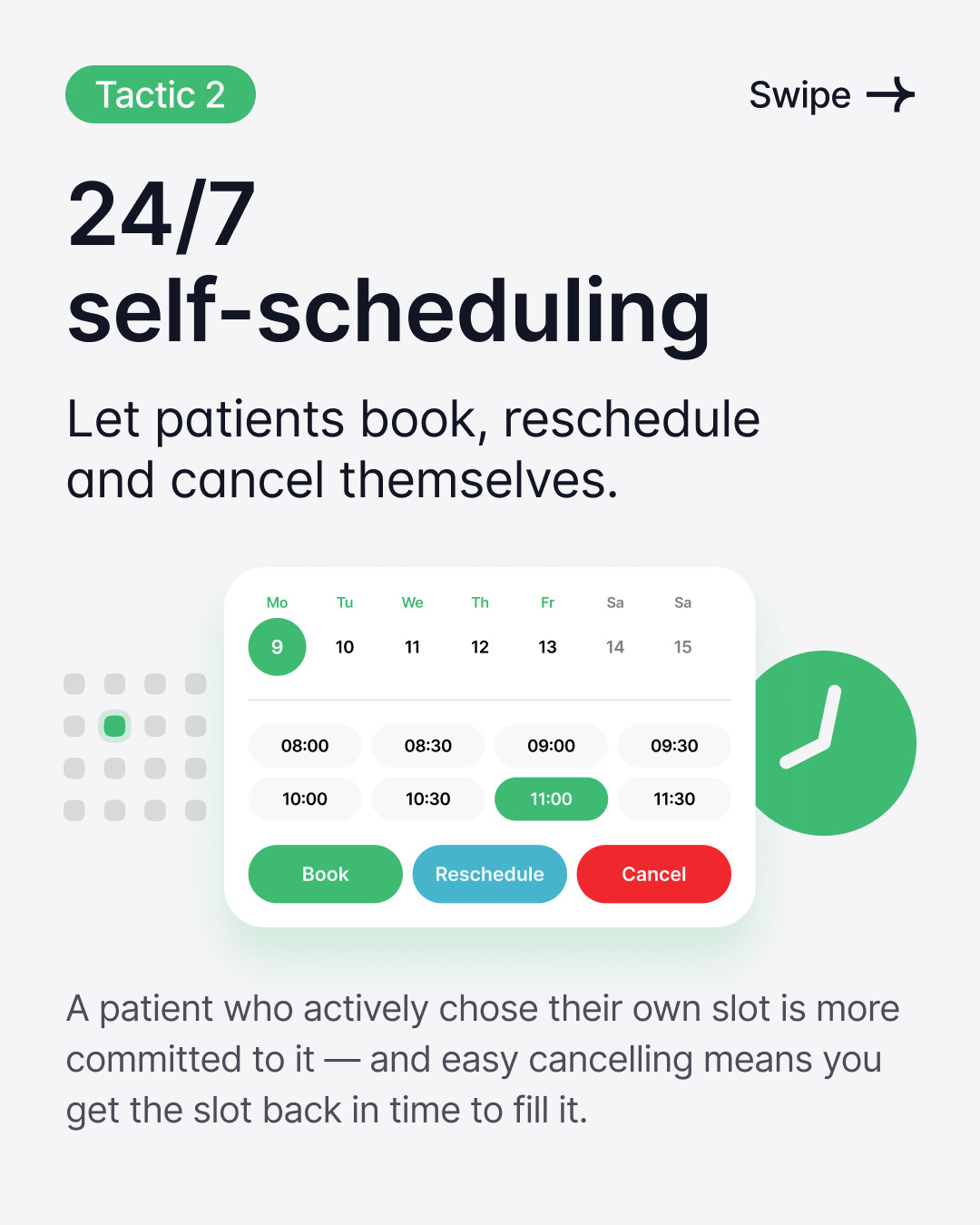
Roughly a quarter of clinic phone calls go unanswered, and every missed call is a patient who might book elsewhere. Self-scheduling captures appointments you'd otherwise lose - and, counterintuitively, reduces no-shows, because someone who picked their own slot feels more ownership of it. Easy, guilt-free cancelling means patients cancel instead of ghosting, so you get the slot back with time to fill it.
3. Make rescheduling easier than disappearing
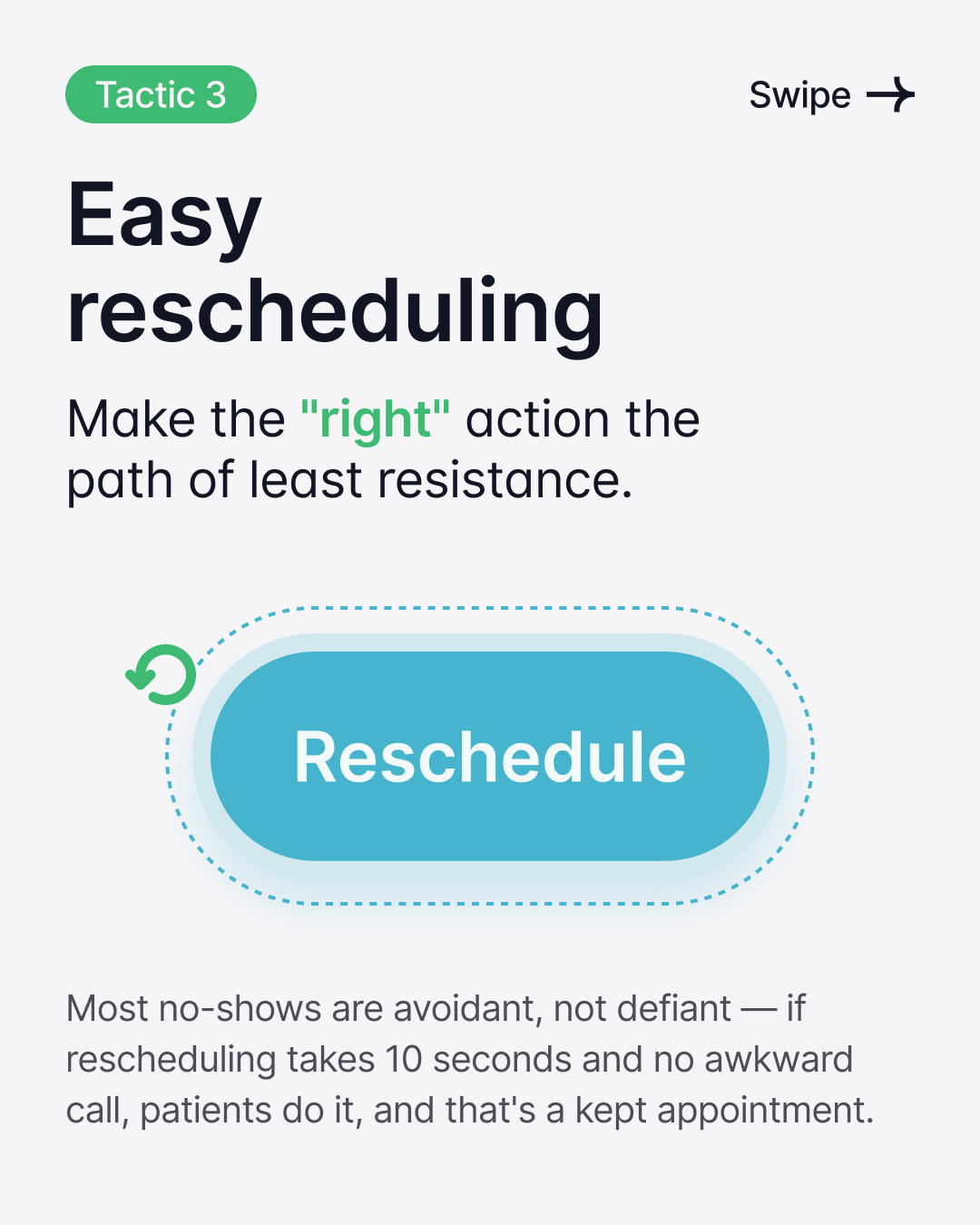
Most no-shows are avoidance, not defiance: a patient realises they can't make it, dreads the awkward call, and just doesn't show. Put a one-tap reschedule option in every reminder. A reschedule is a kept appointment on a different day - not lost revenue.
4. Introduce deposits, prepayment or no-show fees
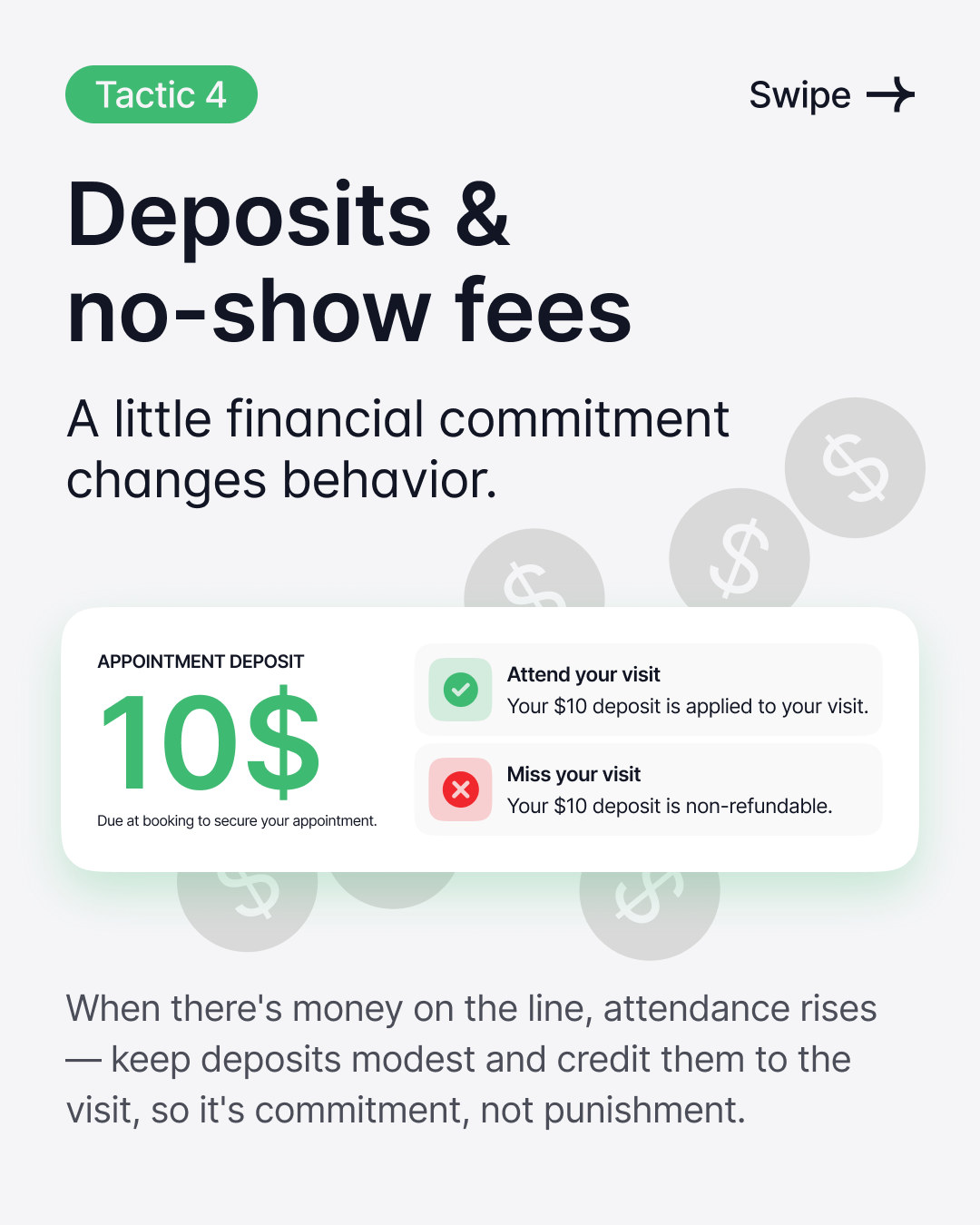
Money on the table changes behaviour. A small booking deposit, prepayment, or a clearly explained no-show fee lifts attendance - especially on high-value, high-demand slots like specialists, procedures, aesthetics, dental and vet. A few guardrails keep it from souring the relationship:
- Explain the policy up front, at booking - never after a missed visit.
- Keep deposits small and credit them toward the visit. You're after commitment, not punishment.
- Make paying effortless - card at booking, or a wallet top-up in your app.
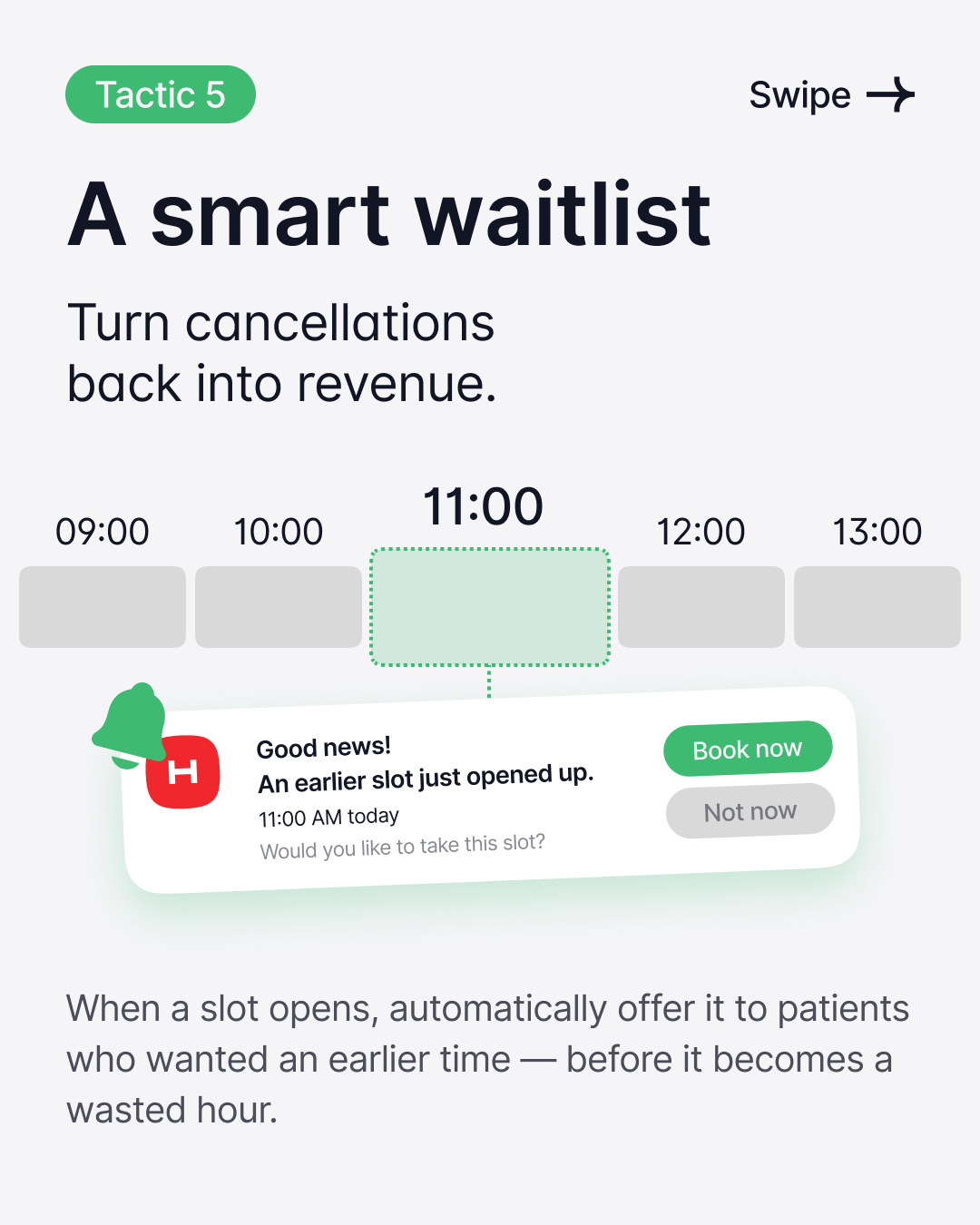
5. Fill the gaps with a smart waitlist
Some cancellations are unavoidable. A waitlist turns those holes back into revenue: the moment a slot opens, your system offers it to patients who wanted an earlier time and fills it before it becomes a wasted hour. It recovers revenue and shortens waits at the same time - which, on its own, tends to improve attendance.
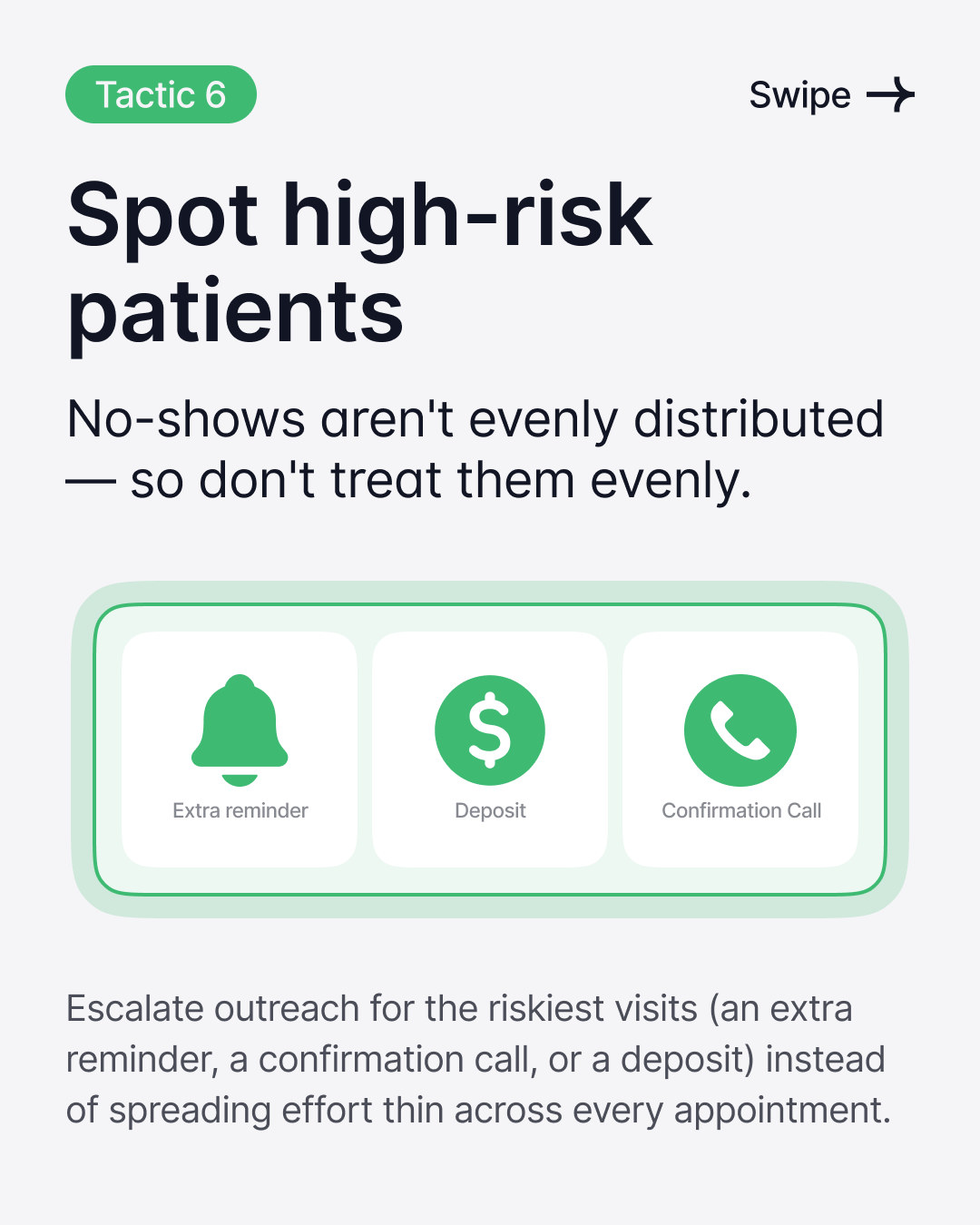
6. Spot high-risk patients
No-shows aren't evenly distributed, so don't treat every appointment the same. Some carry far more risk - first-time patients, certain specialties, Monday mornings, anyone with a history of missing. Escalate outreach for the riskiest visits with an extra reminder, a confirmation call or a deposit, instead of spreading the same effort thin across everyone.
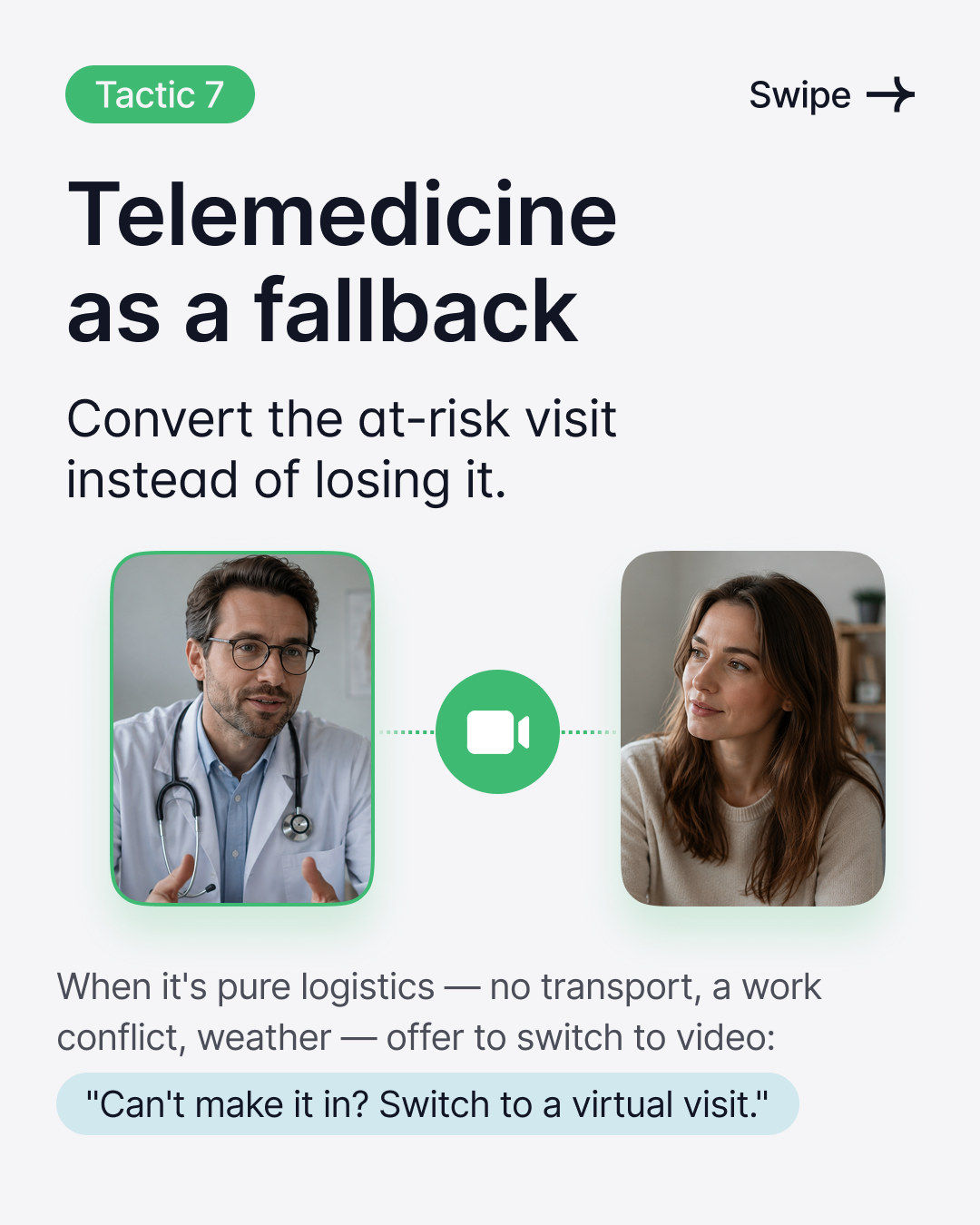
7. Offer telemedicine as a fallback
Many no-shows are plain logistics - a sick child, no lift to the clinic, a work clash, bad weather. For appointment types that don't strictly need an in-person visit - follow-ups, results reviews, medication checks - offer to switch rather than lose it: can't come in, let's do it by video. When telemedicine sits inside the same app as booking, that's a single tap for patient and provider.
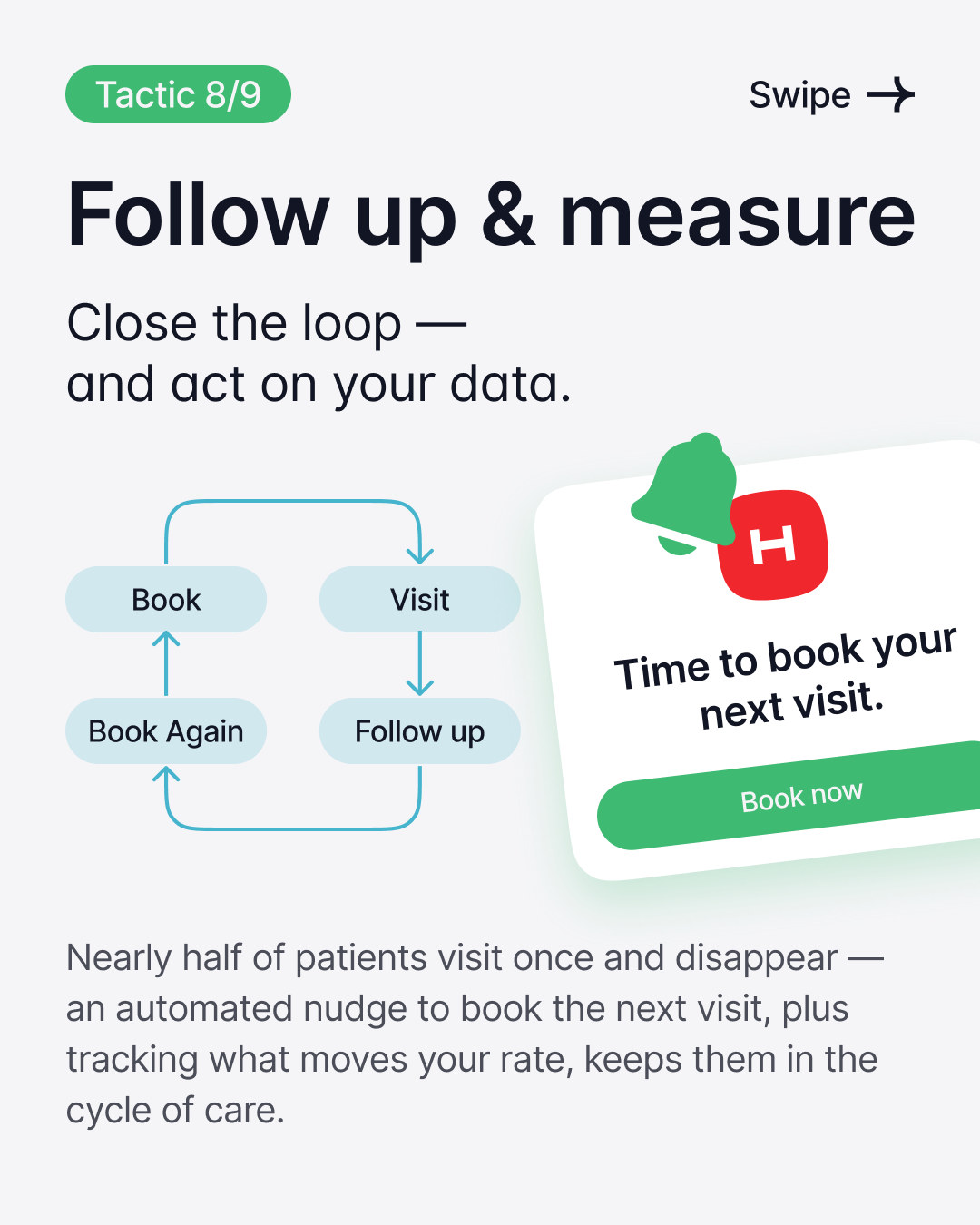
8. Follow up and measure
The visit isn't the end of the loop. An automated nudge to book the next visit - a recall, a check-in, a results follow-up - keeps patients in the cycle of care instead of drifting off after one appointment.
And you can't shrink what you don't measure. Most clinics underestimate their no-show rate because they never calculate it. Track the overall rate and break it down by provider, specialty, appointment type, day of week, and new-versus-returning patient. Benchmark against yourself over time, and do more of what actually moves the number.
Putting it all together
No single tactic reduces no-shows on its own. The clinics that win stack them: reminders patients can act on in one tap, easy self-scheduling and rescheduling, financial commitment where it matters, a waitlist to catch the rest, and data to keep tightening. Do it all together and a 20%+ no-show rate really can fall into single digits - flowing straight through to revenue, provider time, and how many patients stay.
The hard part isn't any one of these - it's running all of them consistently without piling work on your front desk. That's the case for putting booking, reminders, payments, telemedicine and follow-ups into one branded patient app connected to your existing system, so the whole loop just runs.
See what no-shows are costing you
Book a 15-minute demo and we'll show how Holty puts these tactics on autopilot for your clinic, hospital, dental or veterinary practice.
Frequently asked questions
What's a good patient no-show rate?
The average across healthcare sits around 23.5%, and it varies widely by specialty - roughly 19% in primary care, up to about 39% in sleep clinics. For most practices, single digits is a healthy target: under 10%, ideally near 5%, reached by combining reminders, easy self-scheduling and deposits.
Do appointment reminders actually reduce no-shows?
Yes, noticeably. One Imperial College London study found text reminders cut no-shows by 38% versus sending nothing, and most texts are read within minutes. The biggest gains come from a short sequence across several channels, each with a one-tap confirm, reschedule or cancel action.
When should reminders go out?
A practical rhythm: a confirmation the moment they book, a reminder about 72 hours before the visit, and a final nudge the day before. Several well-timed reminders beat a single one every time.
Can clinics charge no-show fees?
Plenty do, and it works when handled with care: spell the policy out clearly at booking, keep any deposit modest and credit it toward the visit, and make paying painless. The goal is commitment, not punishment - so it reduces no-shows without straining the relationship.