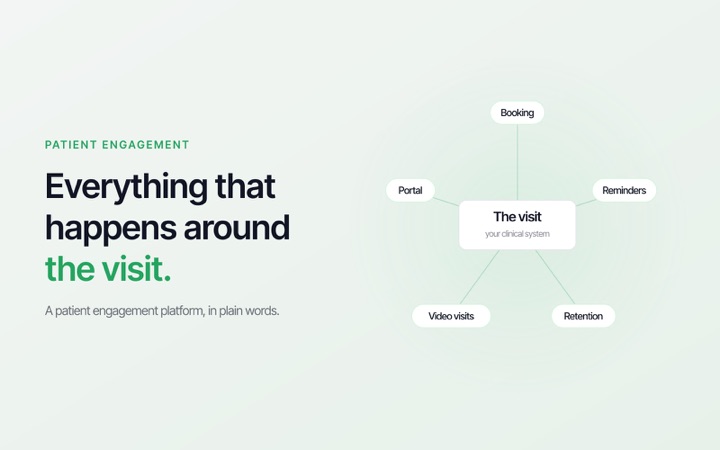
Think back to when telemedicine first took off. The video call felt like the whole thing - a doctor on a screen instead of across a desk. And it worked, for a while. But the video window was really just the training wheels. What actually changes how a clinic runs isn't the call itself - it's everything around it: how the patient turns up, how they get routed to the right person, what happens after they hang up, and where all that data ends up living.
That's the shift worth paying attention to - from telemedicine as a single feature to telemedicine as joined-up virtual care. So let's talk about where this is heading, why it matters to the clinic and not just the patient, and what to look for once the video call stops being the headline.
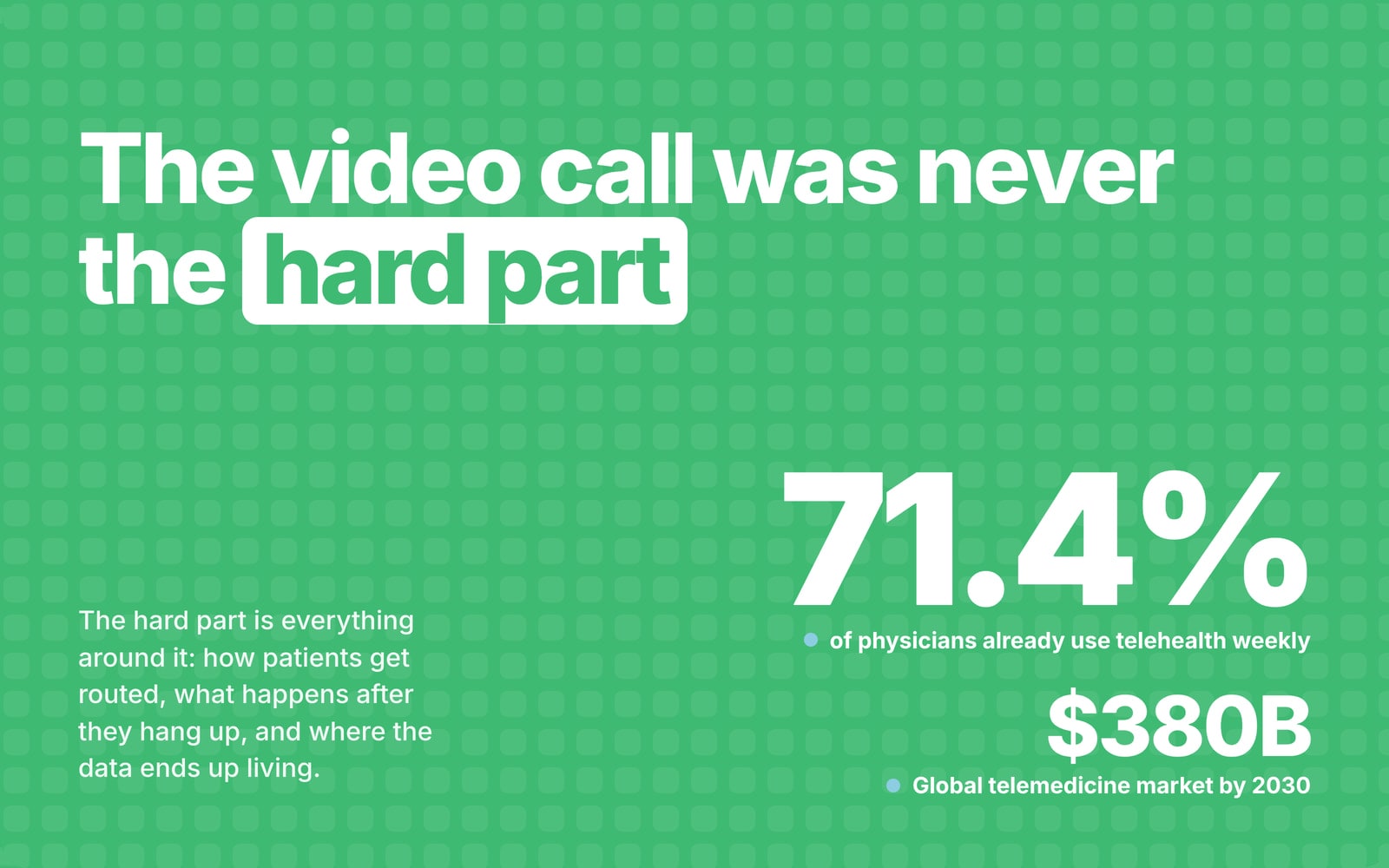
The video call was never the hard part
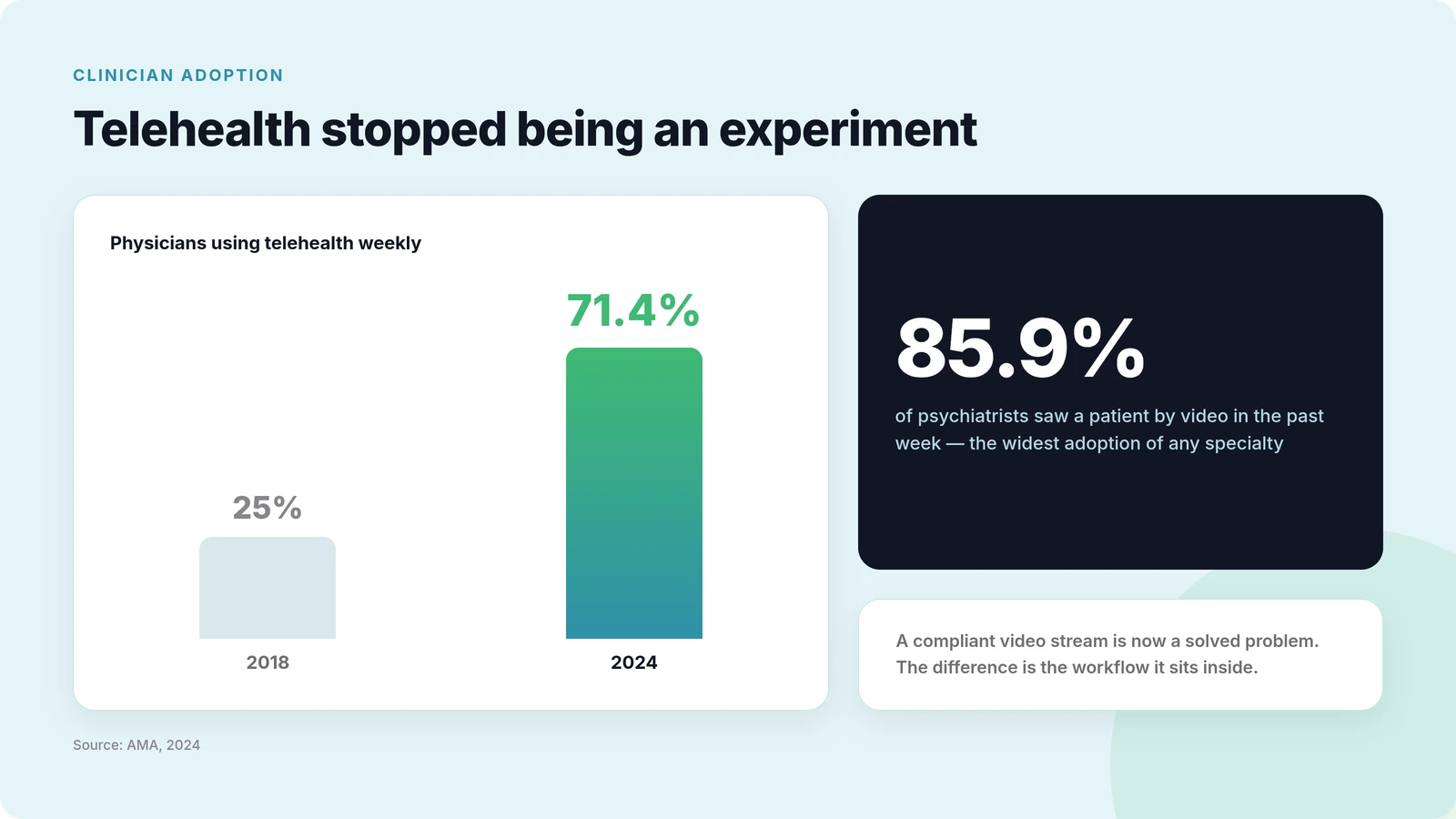
First, the good news: nobody's really arguing about whether telemedicine works anymore. The global market was worth around $141 billion in 2024 and is expected to reach roughly $380 billion by 2030 (Grand View Research). Mental health leads by a distance: 85.9% of psychiatrists saw a patient by video in the past week (AMA, 2024). Primary care and chronic-condition follow-ups aren't far behind.
And this isn't a US-only story. Country-wise, the UK is expected to register the highest growth rate of any market through 2030, and the European telemedicine market overall is projected to grow at roughly 16% a year over the same period - Europe is catching up to, and in places outpacing, US adoption curves.
But here's the part worth noticing. The video feed itself has become a commodity. Standing up a compliant video call is a solved problem now, so a crisper stream won't set anyone apart. A lot of clinics bought telemedicine expecting it to transform how they work, and quietly discovered they'd bought a webcam with a login. The value was never in the pixels. It's in the workflow the call sits inside.
AI that routes the patient before they book
The old way asked patients to diagnose themselves from a dropdown of specialties and hope they guessed right. Plenty didn't, which meant wasted slots, re-referrals, and a first appointment that fixed nothing. The newer approach puts a smart step at the entrance: an AI symptom-triage that reads what the patient types, asks a couple of follow-up questions, and points them to the right specialist the first time.
When it works, it's quietly powerful. It gets the patient to the right clinician faster and clears out the misrouted appointments that gum up a schedule - the difference between a digital front door that opens onto a hallway and one that walks you to the right room.
Follow-ups that don't depend on anyone remembering
The biggest leak in virtual care isn't the visit. It's what doesn't happen afterward. The patient feels better, forgets the check-in they were meant to book, and slips out of care. For years the fix was a staff member, a spreadsheet, and good intentions - which never really scaled.
Automated, well-timed follow-up reminders change that math. When the system does the remembering - nudging the patient to book the next appointment or come back for a recall - continuous care no longer hangs on whether someone happened to remember.
Who sends the follow-up, and what triggers it? If the answer is a person and a spreadsheet, it will hold for a month and then quietly stop.
One connected journey, not five disconnected tools
The thread running through all of this is system integration. The clinics getting real mileage out of telemedicine are the ones where it's a single step in one digital patient journey - the patient books, gets triaged, joins the visit, pays, gets a visit summary, and receives their follow-up, all in one branded app wired into the systems the clinic already uses.
That wiring is what pays off day to day. When the telemedicine platform talks to the clinic's EHR and hospital information systems, the clinician sees the whole history during the call and the notes flow straight back - no retyping, no lost context. Interoperability stops being an IT project and becomes the reason a virtual visit can be every bit as informed as an in-person one.
Owned care beats a rented widget
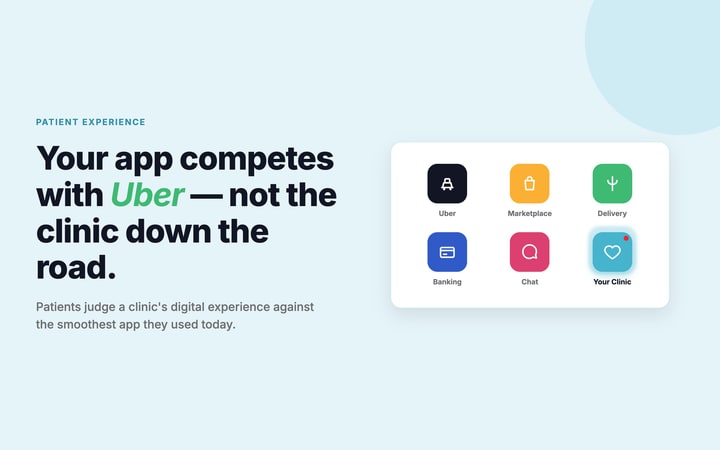
You can rent telemedicine from a marketplace - fast to switch on, but it drops a third party between you and your patients, usually skims a commission, and quietly builds the vendor's brand on the back of your care. Or you can own it: telemedicine running inside your own white-label patient app, under your name, with no marketplace in the middle.
| Rented: marketplace widget | Owned: white-label app | |
|---|---|---|
| Patient relationship | A third party sits between you and your patients | Direct patient relationship, under your name |
| Commercials | Commission on the care you deliver | No commission, no middle layer |
| Brand and data | Builds the vendor's brand, not yours | Patient data stays under your control |
For anything past a pilot, owning it wins. White-label telemedicine keeps the patient relationship where it belongs and the data under your control. The clinics thinking a few years out aren't asking "which video tool?" They're asking "who owns the patient relationship this thing runs on?"
What this means for clinics in 2026 and beyond
Put it all together and the future of telemedicine looks less like a better camera and more like an operating layer for care: smart patient access at the front, care coordination and automatic follow-up through the middle, and data you actually own underneath.
So the practical move is to stop sizing up telemedicine as a standalone video feature and start judging it as part of the whole journey. Ask where the data lives. Ask whether it connects to what you already run. Ask whether it builds your brand or someone else's. Get those three answers right and you own a connected model of care that patients actually stay inside.
That's exactly what Holty is built for: telemedicine inside a clinic's own branded app, connected to existing hospital systems, hosted wherever the clinic needs it, and no marketplace in between.
See what telemedicine looks like inside your own app
Book a 15-minute demo and we'll walk through it with your clinic's setup in mind.
Frequently asked questions
What is the future of telemedicine?
Less about the video call, more about everything around it. The next phase is AI-led triage that routes patients before they book, automated follow-ups that keep people in care, tight integration with the systems a clinic already runs, and patient data the clinic actually owns - with the video visit as just one step in a connected digital patient journey.
Is telemedicine still growing?
Very much so. The global market was around $141 billion in 2024 and is projected to reach roughly $380 billion by 2030 (Grand View Research), and 71.4% of physicians were using telehealth weekly by 2024, up from about 25% in 2018 (AMA, 2024).
What's the difference between a telemedicine platform and a video-call tool?
A video tool hands you a compliant stream and not much else. A telemedicine platform connects the visit to booking, triage, payments, records, and follow-up, and plugs into the clinic's EHR - so the consultation is informed, and the relationship doesn't end when the call does.
Can telemedicine be GDPR-compliant and self-hosted?
Yes. A self-hosted healthcare platform can keep patient data on the clinic's own servers or a private cloud it controls, with residency in the right country - which is how GDPR-compliant software keeps the clinic, rather than a US cloud vendor, accountable for the records.
Does telemedicine reduce no-shows?
More than you'd think. A lot of no-shows come down to plain logistics, so offering to flip an at-risk in-person visit to a video one often rescues an appointment that would otherwise vanish, especially when the switch is a single tap in the same app.