Ask three software vendors what a patient engagement platform is and you will get three answers, each one conveniently shaped like the product they sell. Most of the explanations were also written for American hospitals, so they lean on insurance terms - payers, claims, copays - that mean nothing to a private clinic in Milan, Dubai or Almaty.
Here is the plain version.
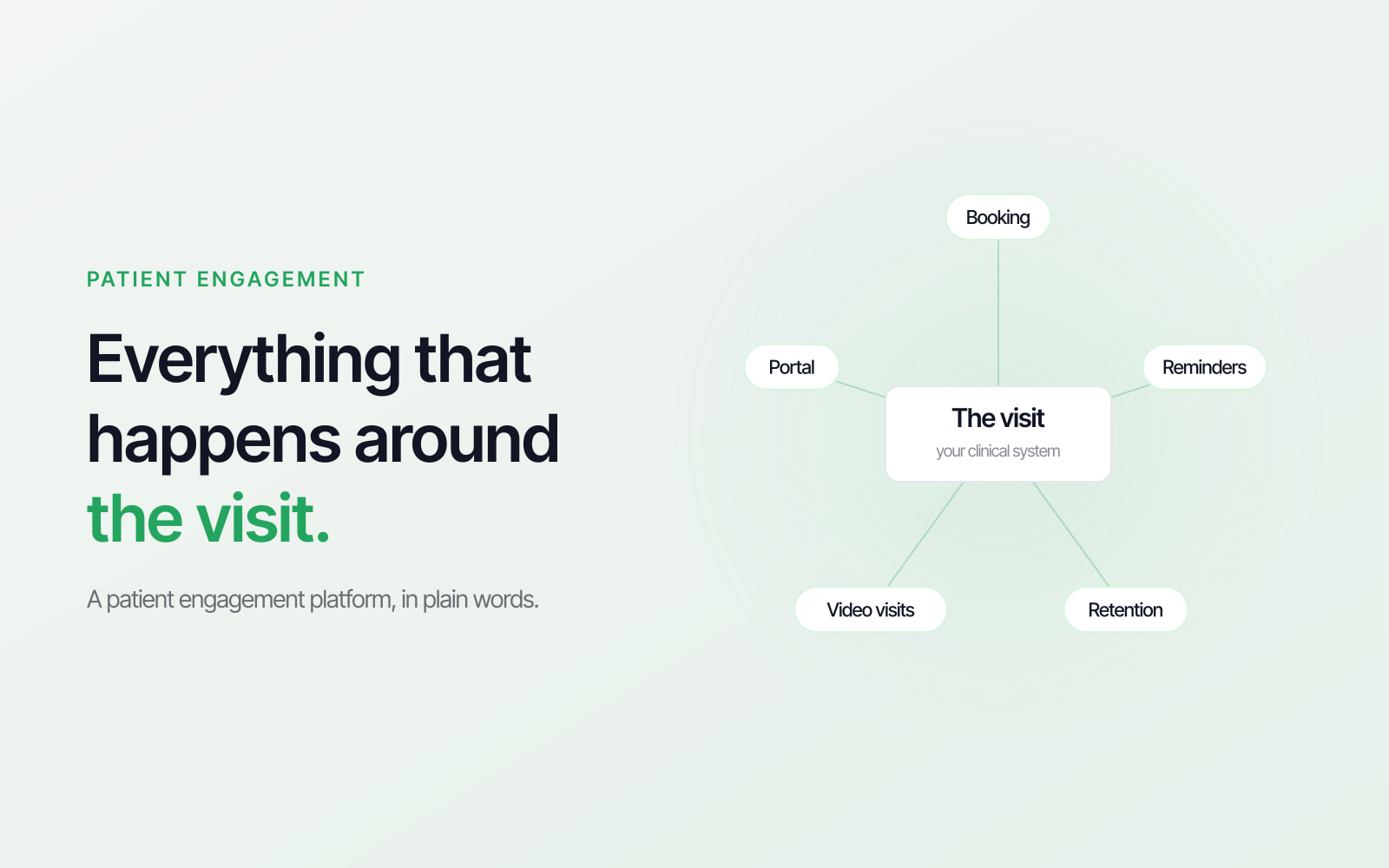
A patient engagement platform is software that manages the relationship between a clinic and its patients between visits - not the medicine, the relationship. Your clinical system records what happened in the consultation room. An engagement platform handles everything around it: how patients find a slot, how they are reminded, how they pay, how they ask questions, and whether they ever come back.
What it replaces
In most clinics, that relationship is currently managed by a telephone, a receptionist's memory, and hope. Booking happens in working hours. Reminders happen if someone has time. Follow-up rarely happens at all. Every one of those gaps costs money: missed appointments alone average around 23.5% of bookings globally, and a large share of first-time patients simply never return.
An engagement platform closes those gaps with software instead of headcount.
The parts, in plain words
Booking
Patients choose and change appointments themselves, at midnight if they like, without calling anyone. The schedule fills without the front desk touching it.
Reminders
Push, SMS or email nudges that go out automatically, so "I forgot" stops being your most expensive sentence.
A patient portal
One place where a patient sees their appointments, documents and payments. On the phone, the same thing takes the shape of a clinic mobile app - ideally carrying your clinic's name and logo, not a software company's.
Video consultations
A telemedicine platform built into the same system, so a remote visit is booked, held and recorded like any other appointment - not improvised over a consumer chat app.
Retention
The part most clinics never get to. Patient retention tools notice who has lapsed - the check-up that never got rebooked, the treatment plan abandoned halfway - and reach out automatically. This is where the platform stops being a convenience and starts being revenue: winning back an existing patient costs a fraction of acquiring a new one.
What it is not
It is not your clinical record system - it connects to it. It is not a marketplace like the big booking portals, which put their brand between you and your patients and charge for the privilege. And a bare patient portal on its own is not an engagement platform either; a portal waits for patients to log in, while an engagement platform goes and gets them.
The question that separates platforms
Once you compare products, the features blur together - everyone has booking, everyone has reminders. The differences that matter are structural. Whose brand does the patient see? Where does the patient data live, and who can take it away from you? And does the platform take a commission on the demand your own reputation generates?
Holty's answers are unusual in this market: your brand on the app, your servers under the data, 0% commission.
See what that looks like on your clinic
Fifteen minutes, your use case, no slideware.