A first visit tells a doctor almost nothing that matters long-term. One blood test, one symptom, one moment in time. The real value of care shows up later - when the same doctor remembers what changed since last time, notices a pattern across several visits, or catches something early precisely because they already know this patient, not a stranger's chart.
Care built in a single appointment is incomplete by design
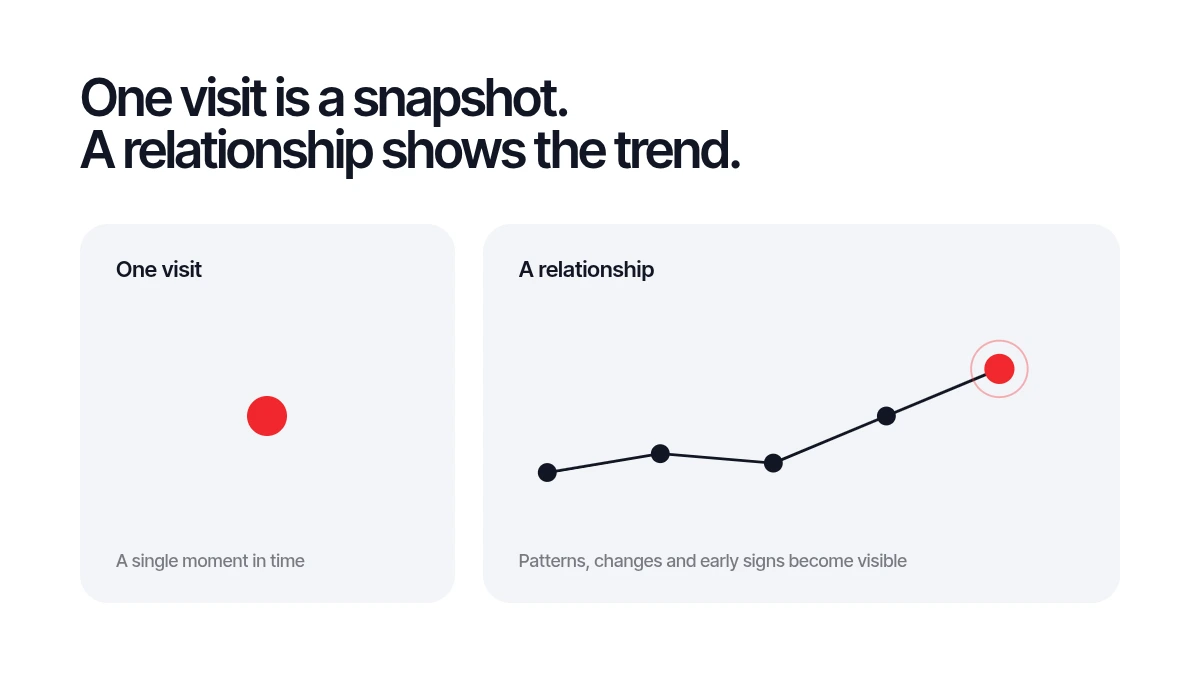
A single visit is a snapshot. It can confirm a diagnosis or resolve an immediate problem, but it cannot show a trend, confirm that a treatment actually worked over time, or catch something that only becomes visible in hindsight. That kind of care depends on a relationship, not a transaction - a doctor who has context, and a patient who trusts that context is being kept and used.
Trust is built outside the exam room, not just inside it
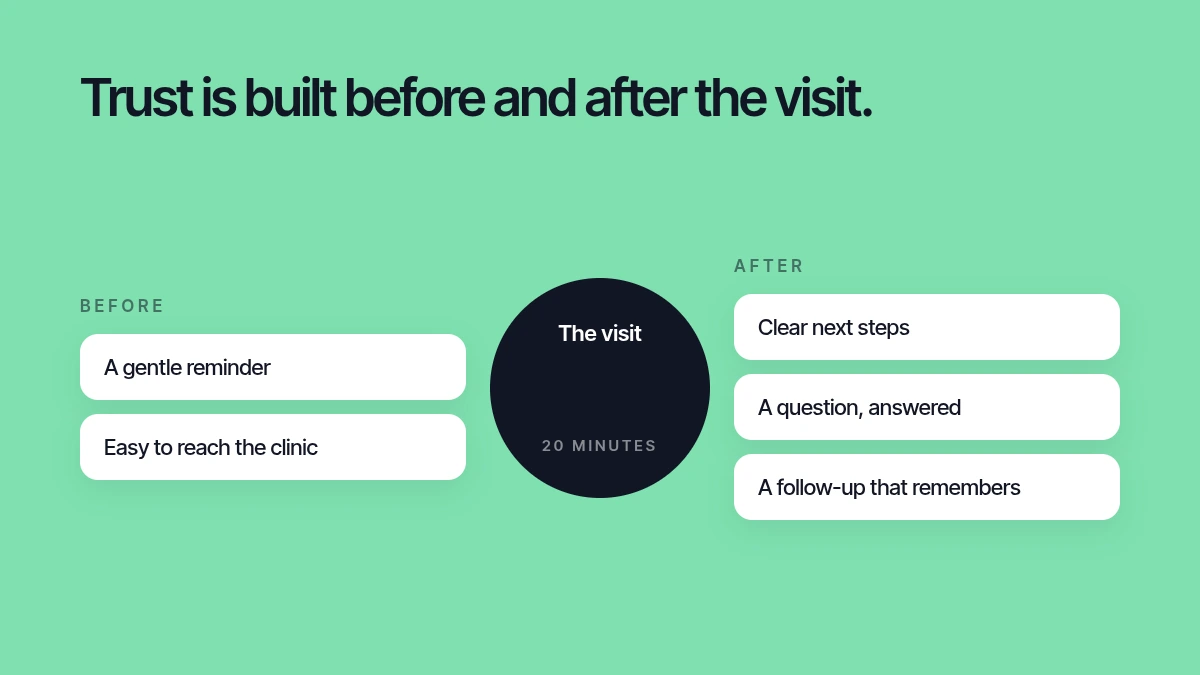
How easy it is to reach a clinic. Whether a patient understands what happens next after a visit. Whether a follow-up actually arrives, or a question gets answered without another phone call nobody has time to make. These moments happen before and after the appointment, and they shape whether a patient feels looked after or simply processed - often more than the clinical encounter itself.
Most clinics are built around the visit, not the relationship
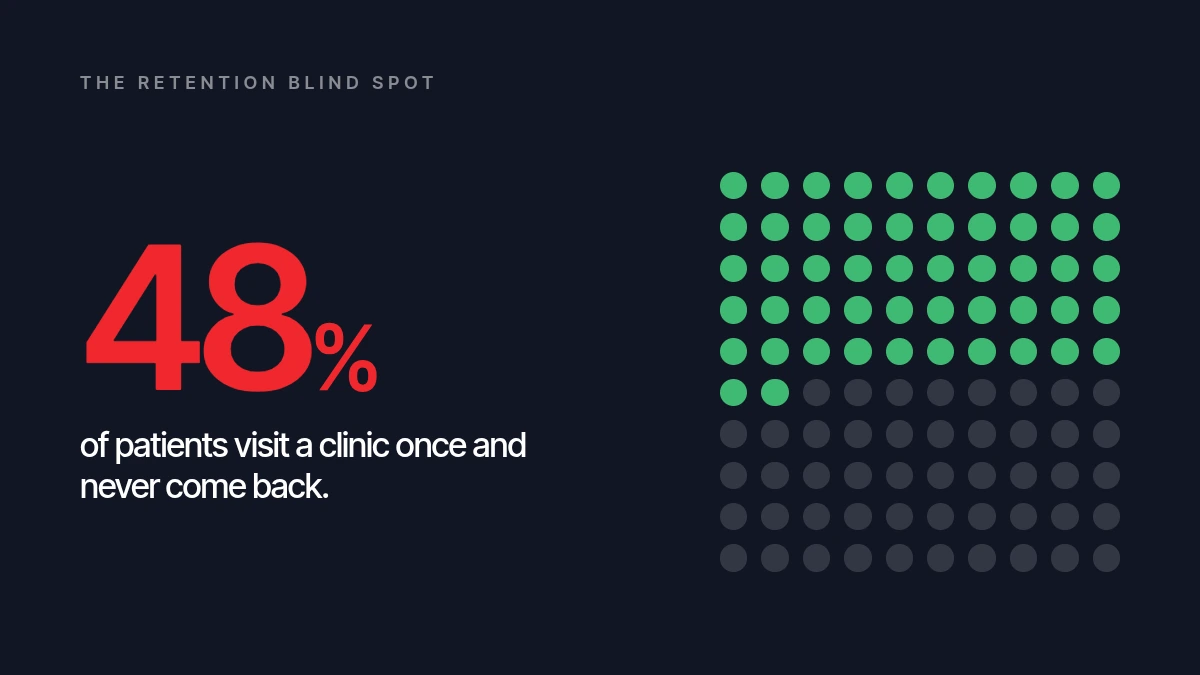
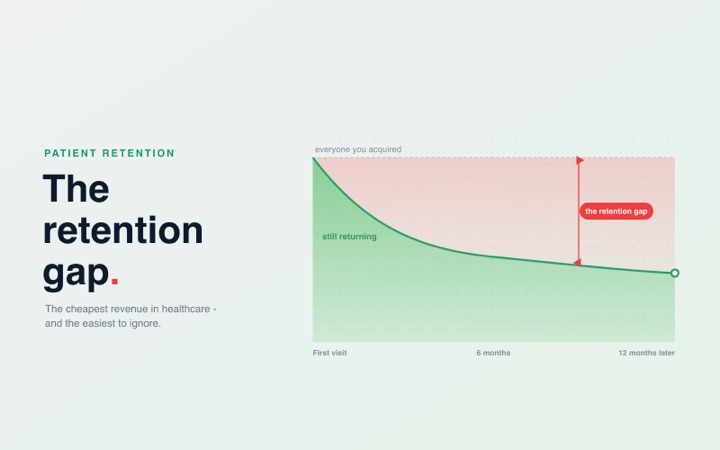
Booking, check-in, the appointment itself: most clinic systems are designed carefully around this narrow window, and far less carefully around everything on either side of it. Close to 48% of patients visit a clinic once and never come back. Some of that is unavoidable. A meaningful share of it is a relationship that never had the chance to continue - not because the care was wrong, but because nothing carried the connection forward after the patient walked out the door.
What a continued relationship actually requires
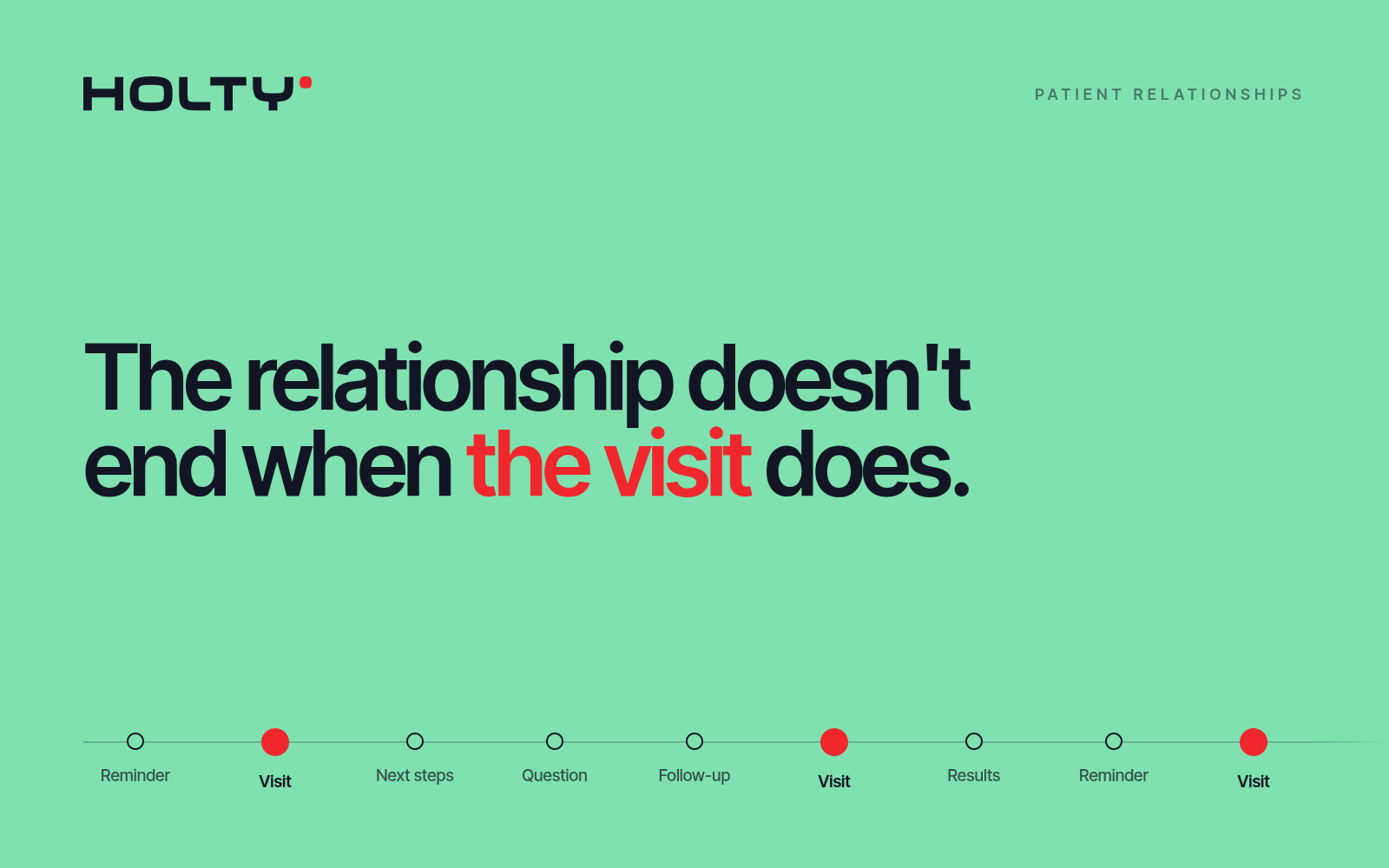
Not more visits for their own sake, and not a marketing message dressed up as care. A relationship that continues needs a few concrete things: a gentle reminder before a visit, so a patient doesn't have to hold the whole schedule in their head. An easy way to reach a doctor with a question afterward, without starting over with someone new. A follow-up that shows the clinic actually remembers the last conversation, not a generic nudge sent to everyone at once.
The whole journey, not just the appointment
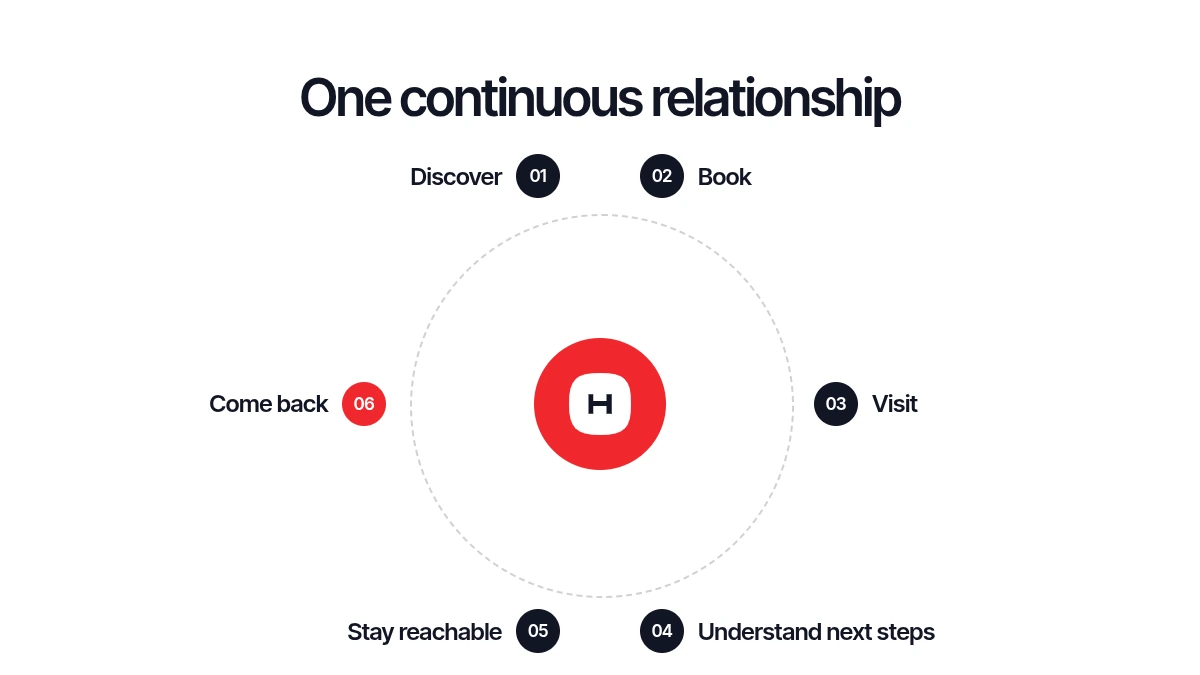
Discover, book, visit, understand what comes next, stay reachable, come back when it's time - a patient experiences all of this as one continuous relationship, even when a clinic's systems treat each step as a separate, disconnected event. When those steps are actually connected, the patient never has to wonder what happens next, and the clinic never has to reconstruct a relationship it already had.
A toolbox for the people running the clinic, not just the ones visiting it
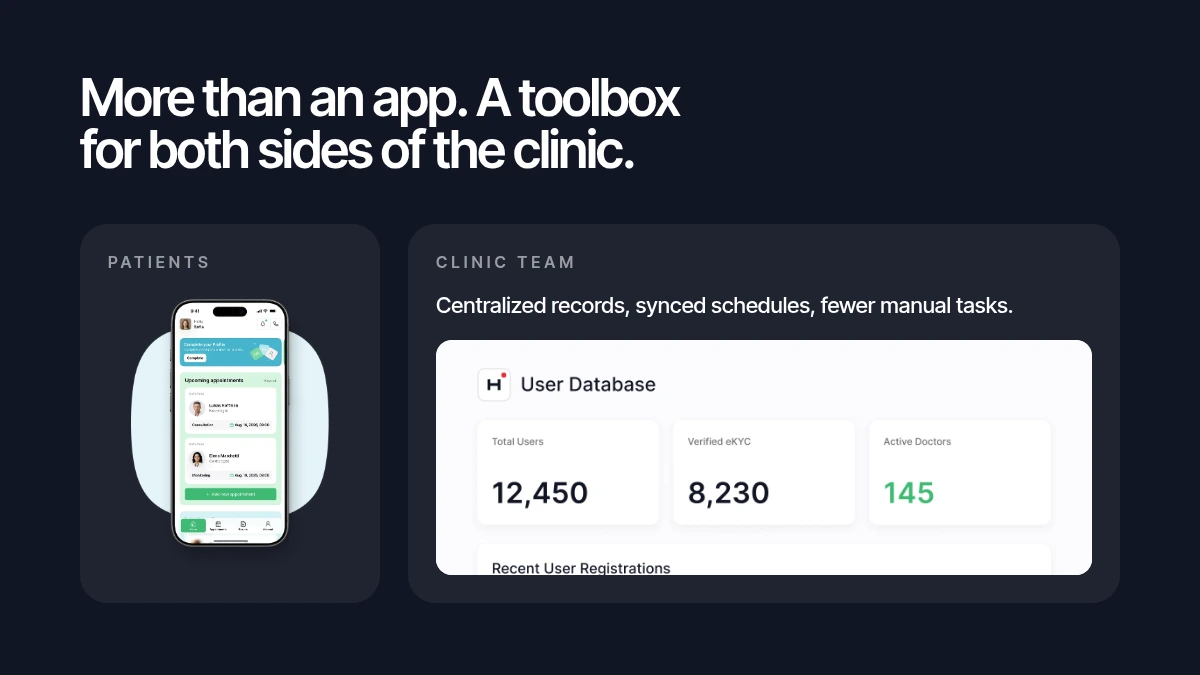
Front-desk staff aren't just managing patients - they're managing systems. A booking sheet here, the HIS there, a note on paper somewhere in between. Every piece of information typed twice, every gap reconciled by hand, is time not spent with the person actually standing in front of them. A real toolbox means centralised, synced information: one place for records, one place for doctor schedules, a system that already reflects what happened at the last visit, without anyone re-entering it.
Managers and directors need visibility, not more spreadsheets - who's overdue for a follow-up, how a campaign actually performed, where a doctor's schedule stands today, without stitching that picture together from five disconnected tools. Less operational weight on the team translates directly into more attention available for patients, which is the whole point.
Holty is more than an app: a digital healthcare toolbox built for both sides of the clinic. Patients stay connected before, during, and after every visit. The people running the clinic get centralised records, synced data, and fewer manual tasks standing between them and actual care. Reminders that respect a patient's time. A doctor's schedule and a front desk's records that finally agree. A follow-up that shows the clinic remembers, not just books.
See what this looks like for your team
Book a 15-minute demo and we'll walk through it with your clinic's setup in mind.
Frequently asked questions
Why does continuity of care matter beyond a single visit?
Because the clinical picture that matters most, patterns, changes over time, early warning signs, only becomes visible across multiple visits with the same provider. A single appointment can treat a problem; a relationship is what actually manages someone's health.
What builds trust between a patient and a clinic?
More than the clinical encounter itself: how easily a patient can reach the clinic, how clearly they understand what happens next, and whether a follow-up actually arrives when it's expected. Trust is built in the gaps between visits as much as during them.
Why do patients stop returning to a clinic they were satisfied with?
Often not because of the care itself, but because nothing carried the relationship forward after the visit ended. No reminder, no easy way to ask a follow-up question, no sense that the clinic remembered them specifically.
What does it mean to treat the patient journey as one continuous relationship?
It means the steps around a visit, before it, and after it, are connected rather than handled as separate, disconnected events. A reminder, the visit itself, and a follow-up all reference the same relationship, not three unrelated interactions.
How does a clinic stay present for patients between visits?
Through small, consistent gestures that don't depend on staff remembering manually: a well-timed reminder before an appointment, an accessible way to reach a doctor afterward, and a follow-up that reflects the patient's actual history rather than a generic message.